Random Card Draw
Instantly draw a card from a freshly shuffled 52-card deck! Each draw here is true randomness—no repeats until the deck is reset. From classic games like Poker and Bridge to classroom probability lessons and fair decision-making, card drawing is a time-honored way to let chance decide. Dive in to discover the math, science, and history behind card draws, and see how our tool delivers fair, unbiased results every time.
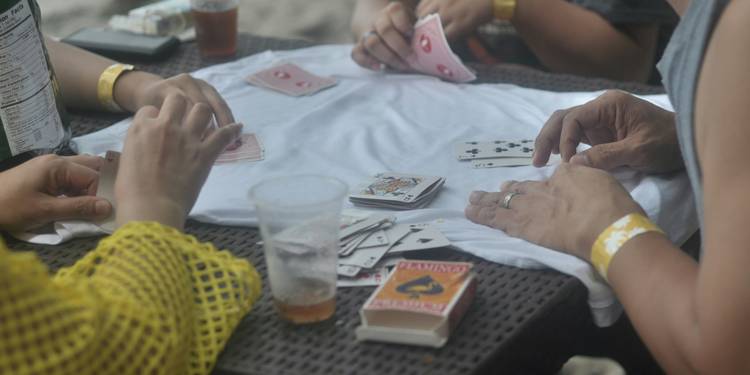
The Structure of a 52-Card Deck
A modern deck of playing cards contains 52 unique cards: 13 ranks (Ace through King) in each of four suits (Spades, Hearts, Diamonds, Clubs). This means every card—like the Queen of Hearts or 5 of Spades—is one of a kind. The total number of ways to arrange all 52 cards is an incredible 52 factorial (52!), which is a number with 68 digits! The number of possible combinations for hands is also staggering:
- 2-card hand: 1,326 possible pairs
- 3-card hand: 22,100 combinations
- 5-card poker hand: 2,598,960 possible hands
- 13-card Bridge hand: 635,013,559,600 ways
This vast number of combinations makes card games both exciting and unpredictable. For an in-depth look at combinatorics, see our Probability Basics guide.
Worked Example: Drawing Several Cards in Sequence
Imagine you shuffle a standard deck and draw cards one at a time. Here's how the probabilities change with each draw:
- First Draw: You have 52 cards, so the chance of drawing, say, the Ace of Spades is 1 in 52 (about 1.92%).
- Second Draw: Now there are 51 cards left. If you want to draw a Heart, there are 13 remaining out of 51, so your chance is 13 in 51 (about 25.5%).
- Third Draw: With 50 cards left, the odds update again depending on which cards are gone. For example, if the first two cards weren't face cards, your chance of drawing a King, Queen, or Jack would be 12 in 50 (24%).
Example sequence: Let's say you draw 5 cards in order: 7♠, Q♥, 2♦, 9♣, and K♠. The chances for each specific sequence is 1 in 311,875,200 (that is, 52 × 51 × 50 × 49 × 48). If you only care about which 5 cards, not their order, it's 1 in 2,598,960 (as above). See our Random Card Picker tool to draw multiple cards at once!
How Does the Card Draw Tool Shuffle?
Our tool uses the Fisher-Yates shuffle, a proven algorithm to ensure every possible deck order is equally likely. This method works by iterating from the last card to the first, swapping each card with another at a random position earlier in the deck (including itself). This randomness prevents clumping and bias you might see with bad shuffles. All shuffling is done instantly in your browser—no server, no hidden code.
Why Fisher-Yates?
Unlike simple hand-mixing or cutting, Fisher-Yates guarantees uniform randomness—meaning every arrangement of the deck is possible and equally likely. It’s the gold standard for shuffling in both gaming and statistics. For details on digital randomness, visit How Randomness Works.
Card Counting, Streaks, and Independence
In a real deck, once a card is drawn, it's gone until reshuffling. This dependency means the odds change with every card drawn. In contrast, if cards were replaced after each draw, every draw would be independent. Our digital tool mimics the real-world case: no repeats until reset.
Card counting (tracking which cards remain) can give players an edge in games like Blackjack, but in most games, the randomness of shuffling and the size of the deck make streaks and patterns rare. After a reset, the deck is fresh, and past draws have no effect.
Tip: Want to track more than one card at a time, or simulate hand draws? Try our Random Card Picker, Dice Roll, or Number Picker tools for more possibilities!
Quick Card Draw Odds Table
| Card | Odds (First Draw) |
|---|---|
| Any specific card (e.g., Ace of Spades) | 1 in 52 |
| Any Ace | 4 in 52 (1 in 13) |
| Any Heart | 13 in 52 (1 in 4) |
| Any Red Card | 26 in 52 (1 in 2) |
| Any Face Card (J/Q/K) | 12 in 52 (3 in 13) |
Odds change on each draw unless you reset the deck. For an in-depth discussion of odds, see Dice Probabilities and Probability Basics.
FAQ: Card Drawing, Probability & Online Fairness
1. How is a digital card draw different from a real deck?
Our digital draw simulates a real deck: each card is unique and not replaced until you reset. Unlike a physical deck, there’s no wear, clumping, or imperfect shuffling. The algorithm guarantees every card is equally likely—no sleight of hand or hidden cards.
2. Is the card draw truly random and fair?
Yes! We use a proven shuffling algorithm (Fisher-Yates) and random number generation built into your browser. For most applications—games, teaching, demos—this is as fair as a well-shuffled physical deck. For more about digital randomness, see How Randomness Works.
3. Can I use this for teaching probability or running a card game?
Absolutely! Our tool is great for classroom demos, math lessons, and running simple games. Teachers can use it to demonstrate probability, combinatorics, and randomness. See our Probability Basics for teaching ideas. For dealing hands or simulating games, try the Random Card Picker.
4. What about card counting or streaks—can I track which cards are left?
You can! The tool reduces the deck with each draw, just like real cards. If you want to see all cards left, use our Random Card Picker to pick multiple at once. After a reset, all cards are back and the streaks are reset.
5. Are digital draws as random as shuffling by hand?
In most cases, yes. In fact, digital shuffling is often more random than fast or careless hand shuffling. The Fisher-Yates algorithm (used here) is mathematically proven to produce uniform shuffles, and digital random numbers are immune to human error. For sensitive applications, see How Randomness Works for more information.
Explore More Card & Random Tools
- Random Card Picker – Pick multiple cards at once
- Dice Roll – Roll dice for games, demos, or learning
- Number Picker – Pick a number in any range
- How Randomness Works – Learn about digital randomness
- Probability Basics – Understand the math behind the odds

Interesting Card Facts
- There are 2,598,960 possible 5-card poker hands from a standard deck!
- A "straight flush" is one of the rarest hands in poker (odds: 1 in 72,193).
- Every time you shuffle a deck of cards thoroughly, it is likely a unique order never before seen in history.
Want to explore more? Try the Number Picker, Yes or No Generator, or Spin the Wheel for other ways to experience randomness!