Random Card Picker
Need to deal cards for Poker, Bridge, or a classroom demo? The Random Card Picker lets you instantly draw any number of cards from a freshly shuffled 52-card deck—no repeats, always fair! Use it to deal hands, pick winners, run probability experiments, or teach combinatorics. Unlike single card draws, picking multiple cards at once is essential for real-life games, group assignments, and simulations. Whether you're teaching probability, running a club game night, or fairly picking contest winners, this tool gives you transparent, unbiased results every time.
When & Why Pick Multiple Cards?
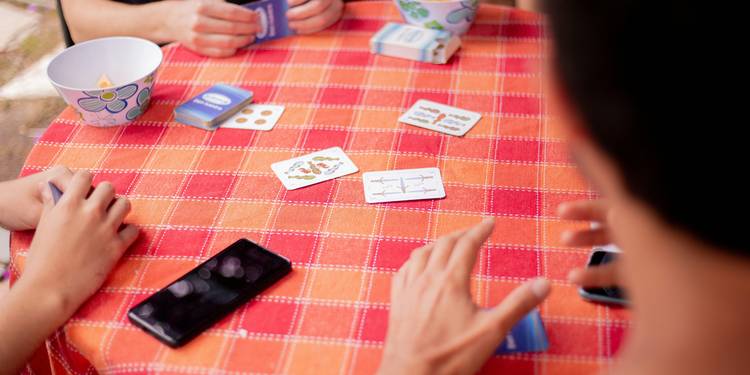
Drawing several cards at once is essential for card games (Poker, Rummy, Bridge), classroom probability experiments, and picking fair winners from a group. In Poker, you might deal 5 or 7 cards to each player. In Bridge, you deal 13 to each. Teachers use multi-card draws to illustrate complex probability, while contest organizers can use them to assign winners or prizes. You can even use this tool to simulate a real shuffle-and-deal for magic tricks or probability demonstrations.
Combinatorics: How Many Hands Are Possible?
Picking N cards from 52 without repeats is a classic problem of combinations. The math tells us how many unique hands or outcomes are possible. Here’s how to calculate it step by step:
-
2-card hand:
52 × 51 / 2 = 1,326unique pairs. (Order doesn’t matter: Ace-King = King-Ace) -
3-card hand:
52 × 51 × 50 / (3 × 2 × 1) = 22,100combinations. -
5-card hand (Poker):
52 × 51 × 50 × 49 × 48 / (5 × 4 × 3 × 2 × 1) = 2,598,960
In general, the formula for combinations is: C(52, N) = 52! / (N! × (52-N)!). For example, for 7 cards: 52! / (7! × 45!) = 133,784,560 possible Poker hands! For more on this, see our Probability Basics page.
Worked Example: Drawing a 7-Card Poker Hand
Let’s say you want to simulate a 7-card Poker hand. Set "Cards to draw" to 7 and click Pick Cards. For instance, you might get:
- 3♠, J♦, 7♥, Q♣, 10♠, 4♣, 9♥
This is your hand—random, with no repeats, just like a real deal. There are over 133 million possible 7-card hands! You can use this to analyze Poker probabilities, run experiments, or play games. Try picking 2 or 3 cards to see how often you get pairs, flushes, or other patterns. For multi-winner draws, use our Order Shuffler to randomize a list, or the Number Picker for number-based draws.
How are the Odds Calculated?
| Scenario | Odds (First Draw) |
|---|---|
| Any specific card (e.g., Ace of Spades) | 1 in 52 |
| Any Ace in a 5-card hand | 4 in 52 (1 in 13) for first card, but increases per draw |
| All cards unique? | Always (no repeats in one draw) |
| 5-card hand probability (any exact combo) | 1 in 2,598,960 |
The odds change as cards are drawn. For example, if the first card is not an Ace, your chance of getting an Ace on the next draw improves (since there are still 4 Aces but only 51 cards left). For more on this, see Random Card Draw or Probability Basics.
Fairness, Randomness & Why Shuffle First?
Our picker uses the Fisher-Yates shuffle—the same algorithm trusted by statisticians and card games worldwide. Shuffling before picking ensures every card (or hand) is equally likely, with no bias or clumping. Picking multiple cards from a shuffled deck prevents repeats—once a card is drawn, it’s gone until you reset. This simulates a real hand-deal in Poker or Bridge, not just picking random cards with replacement.
Why does shuffling matter? Imagine picking a card without shuffling—a deck left in order would give you all the Aces at the end! Uniform shuffling guarantees every possible order (permutation) is possible and equally likely. No matter how many cards you draw, you won’t get repeats until the deck is reset.
Limitations of Digital Card Picking
Digital shuffling (Fisher-Yates) is far more uniform than most human shuffling, which can leave patterns or clumps. Casinos use machines or strict procedures to ensure fairness. Our picker is ideal for teaching, simulating, and running fair draws, but it doesn’t reproduce human errors, bent cards, or imperfect shuffling. For most users, this makes it more fair and truly random!
Combinatorics of Multi-Card Draws
Every time you draw more than one card, you’re sampling combinations. The math is:
C(52, N) = 52! / (N! × (52-N)!). For 2-card, 3-card, and 5-card hands:
- 2 cards: C(52,2) = 1,326
- 3 cards: C(52,3) = 22,100
- 5 cards: C(52,5) = 2,598,960
The number of possible 7-card hands is 133,784,560! Use this tool to explore the wild possibilities of card games, randomness, and probability.
Related Tools & More to Explore
- Random Card Draw – Pick a single card from a fresh deck
- Order Shuffler – Shuffle any list of names/items
- Number Picker – Pick any number between two values
- Probability Basics – Understand the math behind the odds
Fun Facts About Card Combinations
- There are more possible ways to arrange a deck of cards than atoms on Earth.
- Nearly every shuffle produces a deck order never before seen in history.
- Picking 13 cards for Bridge? There are more than 635 billion possible hands!
Want to try other ways to randomize? Yes or No Generator, Flip a Coin, or Spin the Wheel for other quick, fair decisions!
FAQ: Random Card Picker
1. Can I pick the same card twice in one draw?
No. Each draw is without replacement: once a card is picked, it’s removed from the deck until you reset. This matches the real rules of most card games, ensuring fairness and accurate probabilities. If you want to allow repeats, try picking one card at a time and reshuffling between picks, or use the Card Draw tool with a reset after each pick.
2. How does the shuffling work?
Our tool uses the Fisher-Yates (Knuth) shuffle—the gold standard for randomizing lists. It ensures that each possible order of the deck is equally likely. Unlike hand-mixing, which can leave clumps or patterns, digital shuffling is mathematically uniform. This makes our picker ideal for fair games, teaching, and research.
3. How do casinos ensure fairness in card dealing?
Casinos use strict shuffling protocols—often special machines—and surveillance to guarantee fairness. The Fisher-Yates shuffle (used here) is more random than most human techniques. For regulated games, oversight and transparent procedures prevent manipulation. Our picker is designed for classroom, demo, and casual usage, but uses the same math as serious gaming software.
4. Why don't I see the same patterns as in real decks?
Digital shuffling is free from human error—no bent cards, marked faces, or uneven mixing. That means you won’t see clumping, streaks, or "bad shuffles" as you might with physical cards. For most users, this is a benefit—it ensures complete fairness. If you want to simulate human shuffling quirks, try manually arranging a deck and using the Card Draw tool.
5. Can I use this tool for official draws or contests?
This tool is perfect for classroom demos, club games, and informal contests. For high-stakes or official regulated draws, always verify local laws and use additional oversight for transparency. Our tool does not store results or track history, so it’s ideal for privacy and fairness, but not for legal or regulatory reporting.