Flip a Coin Online
Flipping a coin is a classic, time-tested way to make fair decisions whenever a group is at an impasse. Whether you're settling who goes first in a board game, breaking a tie in a sports match, or teaching the fundamentals of probability and randomness, a coin flip provides an instant, unbiased answer.
Our online Coin Flip tool simulates a real coin toss, giving you an instant Heads or Tails result—every time is truly random. Use it for games, classroom activities, group decisions, or just for fun!
- Make quick, impartial decisions in any situation
- Learn about probability, streaks, and randomness
- Teach independence of events and fairness
For an in-depth look at the math behind coin tossing, see our Probability Basics and How Randomness Works guides.
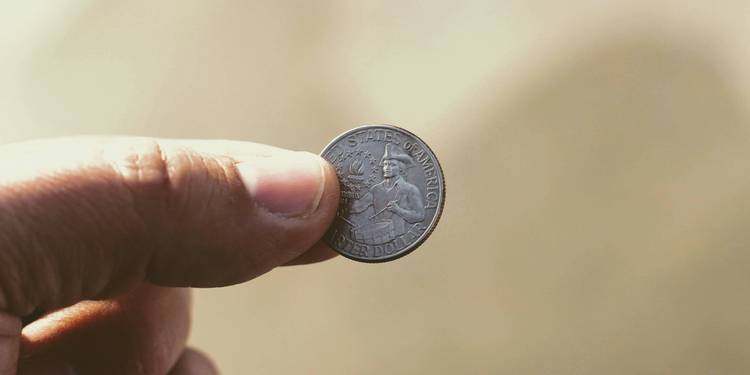
Real-World Example: Settling a Game with a Coin Flip
Imagine two soccer teams are tied at the end of a championship match. To decide which team gets to choose the goal to defend for the final shootout, the referee flips a coin. Team captains call "Heads" or "Tails" before the toss. The coin spins in the air and lands—it's Heads! The team that called Heads gets their choice, and the game proceeds fairly.
In group activities, a coin flip can end a debate or break a tie instantly. For example, if friends can't agree on which restaurant to visit, assign each option to Heads or Tails, flip the coin, and let chance decide. It's impartial, transparent, and everyone can see the result.
How Does Coin Flipping Work?
Coin flipping is one of the oldest and simplest ways to make a fair, random decision. When you toss a coin, it spins in the air and lands with either its "Heads" side or "Tails" side facing up. If the coin is fair and the toss is unbiased, both outcomes are equally likely.
Common Applications of Coin Flipping
- Decision making: Quickly settle ties or make choices without debate.
- Games and sports: Decide who takes the first turn, who serves, or who chooses sides.
- Teaching: Demonstrate randomness, independence, and probability concepts in the classroom.
Coin Flip Probability
Each coin toss has exactly two possible outcomes. Assuming the coin is perfectly balanced and the flip is unbiased, the probability of getting Heads is 50% (1 in 2), and the probability of getting Tails is also 50%. For each new toss, the odds remain the same—previous results have no impact on future flips.
| Outcome | Probability |
|---|---|
| Heads | 50% |
| Tails | 50% |
This makes coin flipping a textbook example of a binary random event, perfect for teaching and exploring the laws of probability. For more on these principles, visit our Probability Basics page.
Independence of Flips & Law of Large Numbers
Each coin flip is independent—the result of one flip does not affect the next. This means getting Heads five times in a row doesn’t make Tails any more or less likely on the next toss. Over many flips, the ratio of Heads to Tails will approach 50:50, illustrating the law of large numbers in probability.
| Flip | Result |
|---|---|
| 1 | Heads |
| 2 | Tails |
| 3 | Heads |
| 4 | Heads |
| 5 | Tails |
| 6 | Heads |
| 7 | Tails |
| 8 | Heads |
| 9 | Tails |
| 10 | Heads |
In this simulated run, Heads appeared 6 times and Tails 4 times. Over thousands of flips, the proportion will get closer to 50% for each result—but in small samples, streaks and uneven counts are normal. Streaks like "Heads, Heads, Heads" happen by chance and do not indicate bias.
Advanced Coin Flip Probability
The probability of getting a particular sequence of results can be calculated using basic probability rules. For example:
- Two flips, both Heads: 1/2 × 1/2 = 1/4 (25%)
- Three flips, all Heads: 1/2 × 1/2 × 1/2 = 1/8 (12.5%)
- Four flips, all Heads: 1/2 × 1/2 × 1/2 × 1/2 = 1/16 (6.25%)
Likewise, the probability of getting exactly two Heads in three flips (in any order) is 3/8 (37.5%). These calculations help illustrate how quickly the odds decrease for long streaks. For more advanced probability topics, visit our Probability Basics page or try our Dice Roll tool.
Fairness & Randomness in Online Coin Flips
Our online Coin Flip tool uses modern browser technology to generate random outcomes. Where available, we use secure random number generation (via window.crypto.getRandomValues) to ensure each result is as unpredictable as a physical toss. For more details, visit our How Randomness Works resource.
FAQ: Coin Flipping, Fairness & Probability
Related Games & Tools
- Dice Roll — Try your luck with a virtual die. (6 possible outcomes)
- Number Picker — Pick a random number from any range.
- Card Draw — Draw a random playing card from a full deck.
- Probability Basics — Explore fundamental concepts to understand chance.
- How Randomness Works — Learn how true randomness is simulated online.
Ready to get started? Flip the coin above as many times as you want—it's free, instant, and always fair!
Learn More About Probability & Fair Games
If you’re curious about the mathematics behind coin tossing and other games of chance, check out these resources: