History of Randomness
From bone dice in ancient civilizations to today’s computer-powered random number generators, the concept of randomness has shaped games, science, art, and decision making for thousands of years. This page explores the colorful journey of chance—from its earliest uses to its pivotal role in our modern digital world.
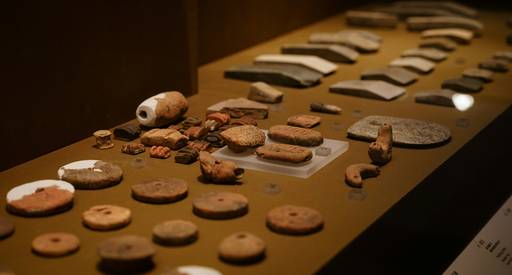
Early Randomness: Dice, Lots, and Divination
Evidence shows that humans have used random tools for over 5,000 years. Archaeologists have found dice made of bones, stones, and clay dating back to ancient Mesopotamia, Egypt, and the Indus Valley. These objects weren’t just for play—they were used in rituals, to make decisions, and even to predict the will of the gods.
- Ancient Dice: Some of the earliest dice (c. 3000 BCE) were six-sided, just like today’s, but others had different shapes or markings.
- Drawing Lots: Cultures around the world—China, Greece, Africa—used sticks, stones, or pieces of pottery to draw lots for both games and serious decisions.
- Coin Flipping: The practice of flipping coins is at least 2,000 years old, with Roman coins used for “navia aut caput”—ship or head.
Randomness in Games of Chance
As societies grew, so did the love of games. Dice, cards, and lottery-like draws became popular for both entertainment and gambling. By the Middle Ages, dice games were played across Europe and Asia, with rules codified and odds sometimes calculated. Card games arrived later, probably from China or India, eventually spreading to every continent.
- Lotteries: The first recorded public lottery was held in ancient Rome to fund city repairs. Lotteries became a staple of government revenue and entertainment in many cultures.
- Playing Cards: Cards were introduced to Europe around the 14th century and revolutionized both gaming and probability studies.
- Roulette & Wheels: Spinning wheels and ball-in-slot games emerged as new ways to randomize outcomes.
Randomness and the Birth of Probability
The 17th century saw the rise of mathematical probability. Mathematicians like Blaise Pascal and Pierre de Fermat began to analyze dice and card games, laying the groundwork for probability theory. Their work was initially focused on gambling problems, but it soon became the basis for statistics, science, and risk assessment.
- Pascal’s Triangle: A tool for calculating combinations, crucial in understanding dice and card odds.
- Bernoulli, Laplace, and Poisson: Expanded the theory to cover more complex scenarios, like lotteries and insurance.
The Modern Era: Randomness in Science and Technology
In the 20th century, randomness became vital to science and technology. Random number tables were used for statistics, simulations, and cryptography. The first true random number generator was a book published in 1955 (“A Million Random Digits with 100,000 Normal Deviates”), used for scientific experiments before computers became widespread.
- Computers & Pseudorandomness: As computers emerged, programmers created algorithms to generate random-looking numbers. While fast and useful, these are technically “pseudorandom”—not truly random, but close enough for most uses.
- Hardware RNGs: Today’s best random number generators use physical phenomena—like radioactive decay or electronic noise—to generate true randomness, crucial for cryptography and security.
Randomness in Today’s Digital World
Randomness now powers much of our digital life: from shuffling playlists and cards, to securing online transactions, to ensuring fairness in games and lotteries. Modern tools like Coin Flip, Dice Roll, and Number Picker bring chance to your fingertips, using advanced algorithms for fairness and unpredictability.
Randomness and Culture
Randomness has always been more than just play—it’s deeply tied to fate, luck, and the unpredictable nature of life. From tossing coins to drawing lots, societies have trusted randomness to resolve disputes, choose leaders, and make peace with uncertainty.
Learn More & Explore
- How Randomness Works – See the difference between true and pseudorandom numbers.
- Probability Basics – Learn the math behind chance and odds.
- Flip a Coin – Experience digital randomness in action.
- Roll Dice – Simulate classic dice games online.
- Number Picker – Pick random numbers for any use.
Randomness continues to intrigue, entertain, and empower us. For questions about the science or history of chance, email: team@diceflipper.com.